


At the recent Sustainable Smart Manufacturing Forum organized by the Vietnam Industrial Park Information Portal in Ho Chi Minh City, the issue of high-quality human resources for technology projects attracted significant attention from attendees. This is no longer a problem for individual businesses, but a systemic challenge. From the perspective of industrial park managers and training institutions, the solution to this "bottleneck" lies in a more comprehensive and substantive collaborative model.
Tissue image “"Open classrooms" and hFlexible two-way connectivity system
Sharing with the Government Electronic Information Portal at the Smart and Sustainable Manufacturing Forum, organized by the Vietnam Industrial Park Information Portal – VIZ, According to Mr. Huynh Bao Duc, General Director of Hiep Phuoc Industrial Park, the industrial park's human resources department has acted as a coordinating center, understanding the needs of each factory regarding job positions and types of labor, and proactively connecting with suitable training schools.
Since 2016, Hiep Phuoc Industrial Park has transformed from simply providing infrastructure to offering comprehensive "human resource services" to businesses.
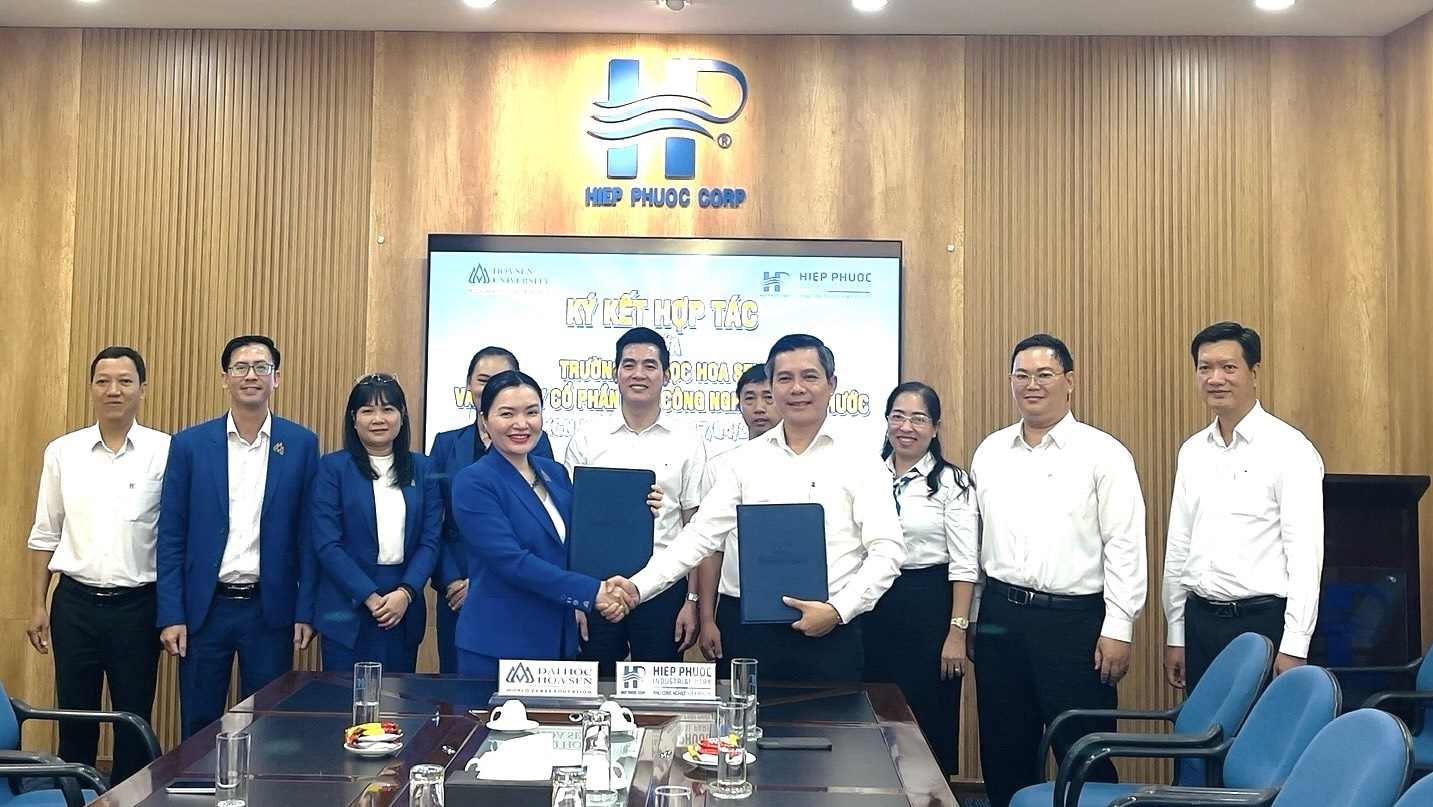
“"Right from the planning stage of the industrial park, we clearly defined the industry sectors to attract investment," Mr. Duc shared. Based on that, the industrial park has proactively signed memoranda of understanding (MOU) with many universities, colleges, and vocational schools to implement cooperation programs that closely match the realities of production.
According to Mr. Duc, human resource networking activities at Hiep Phuoc Industrial Park take place in two directions. Firstly, targeted networking through established MOUs, creating a foundation for long-term training coordination. Secondly, flexible networking based on emerging needs – when businesses have specific requests, the Management Board will activate the available system to respond quickly.
“"Recruitment requirements from businesses are essentially just a concrete manifestation of a pre-prepared overall strategy, ensuring quick and efficient connections," Mr. Duc emphasized.
A key feature of the Hiep Phuoc model is its ability to accommodate student interns and visitors while businesses continue their normal production operations. Businesses arrange their processes efficiently, allowing students to observe and learn without impacting business performance.
“"Students not only gain access to a real-world production environment and modern technologies like robots and automated production lines, but also see the entire product creation process," Mr. Duc described. Many students, after visiting and interning, shared their desire to work here after graduation.
With a total planned area of up to 1,600 hectares, Hiep Phuoc Industrial Park is the largest industrial park in Ho Chi Minh City. Currently, phase 1 has filled 951 units, phase 2 has reached approximately 301 units, and phase 3 is in the process of land compensation and clearance. “Universities also benefit from this as they need a place for students to practice, to connect training programs with practical production. Hiep Phuoc Industrial Park is a real ‘open classroom’ in the midst of economic life,” Mr. Duc commented.
However, this model also faces numerous challenges. Mr. Duc frankly admitted that while connections exist, they lack depth. "Over the years, we have proactively signed cooperation agreements with many reputable universities and colleges, but the actual level of engagement remains limited, and many institutions have not proactively developed detailed plans to implement the cooperation.".
Another major challenge is geographical location. The Hiep Phuoc Industrial Park is located in Nha Be District – a suburban area of Ho Chi Minh City, causing some workers to consider the distance, commuting time, and cost of living. The implementation of collaborative activities still largely depends on HIPC's efforts, while universities have many other business options to partner with.
“"The lack of coordination has led to low efficiency. Although some programs have been successfully implemented, the overall annual results have not met expectations due to the lack of a long-term, unified plan between the two sides," Mr. Duc shared.
To improve efficiency, Mr. Duc said the industrial park is building a mechanism for regular meetings with each school that has signed an MOU to review the cooperation content. At the same time, it is strengthening the timely sharing of data on recruitment needs with schools regarding industry and job position requirements.
In particular, the industrial park is proposing a "training order" model – HIPC will act as the focal point to propose that schools organize customized training courses according to the needs of businesses, thereby increasing the likelihood of students returning to work after internships.
Although there are no specific statistics on the percentage of students who return to work in industrial parks after internships, according to Mr. Duc, there have been many cases of students staying with the businesses where they learned for a long time, showing the clear effectiveness of this model.
Perspective from educational institutions: research needs to be applied in real life.
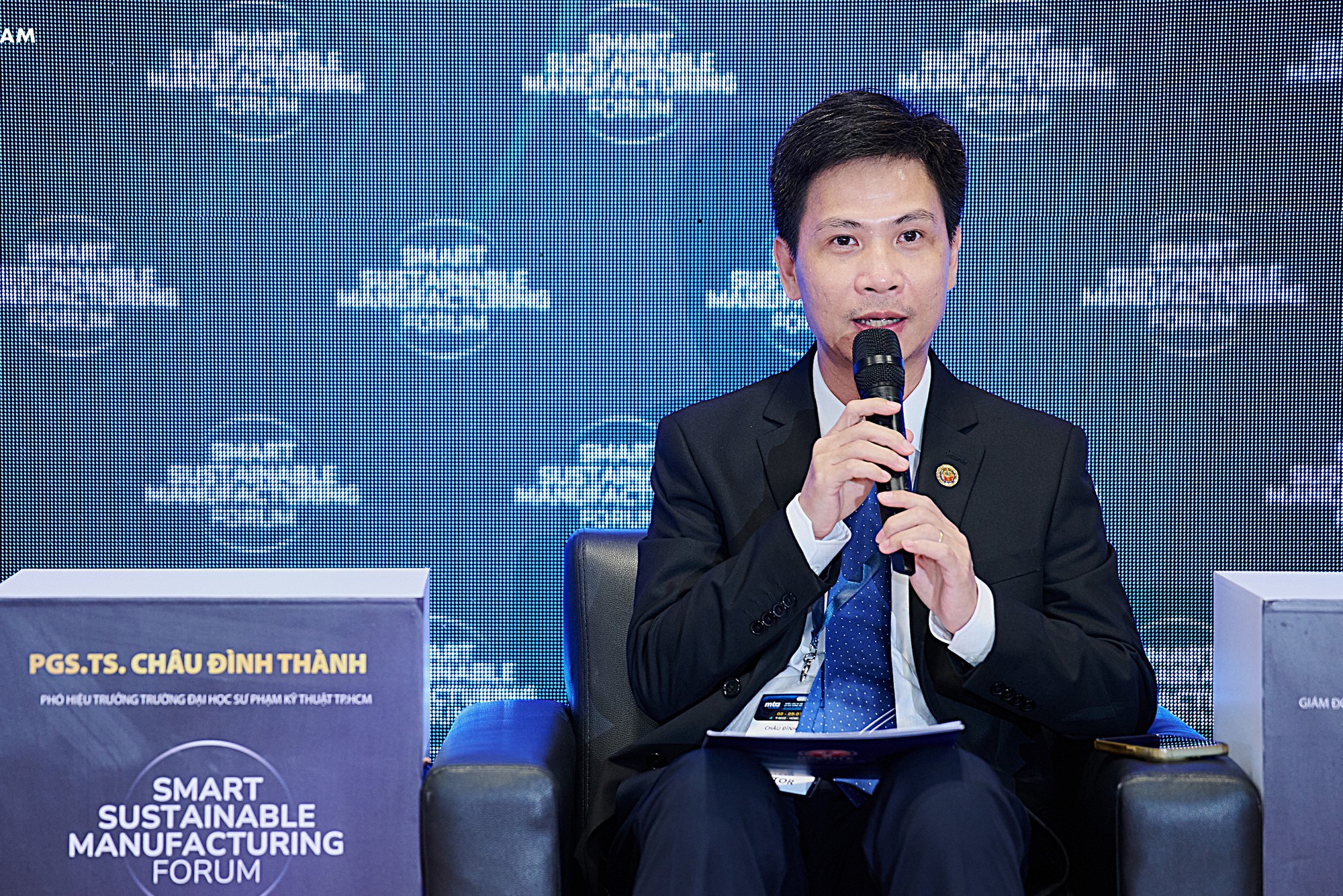
As the Executive Chairman of the Sustainable Smart Manufacturing Forum 2025, Mr. Chau Dinh Thanh (Vice Rector of Ho Chi Minh City University of Technology and Education) provided a strategic perspective from the viewpoint of educational institutions.
Regarding strategy, Mr. Thanh affirmed that the top priority of universities is not only to train high-quality human resources to meet the increasingly stringent demands of businesses, but also to be centers for research, technology transfer, and strategic partners helping businesses implement transformation in a systematic, in-depth, and sustainable manner.
“"We don't maintain a single training program framework for many years. Continuously updating the curriculum and training content to suit the development and needs of society, along with the direct participation of businesses in the training process, is a key factor, helping students access practical production experience right from their time in school," Mr. Thanh shared.
Regarding action, The school has proactively invited businesses to participate in the curriculum development council, invested heavily in laboratory and practical equipment, and received donations of equipment and actual production lines from businesses to create pilot models. According to Mr. Thanh, this collaboration helps students graduate not only with knowledge but also with a perfect fit for job market demands.
However, the university also faces its own concerns and challenges. One of them is how to integrate scientific research topics into real-world production. “Many lecturers at the university are conducting research and developing new technologies. But to prevent these studies from being ‘shelved,’ we hope that businesses will proactively approach us and commission practical research projects. Conversely, the university will also actively promote its research products,‘ Mr. Thanh urged.
The solution is called "The Three Houses".“
The candid remarks from Mr. Huynh Bao Duc and Mr. Chau Dinh Thanh at the Sustainable Smart Manufacturing Forum revealed a clear reality: the individual efforts of industrial parks or schools alone cannot completely solve the human resource problem. The challenges faced by one side are precisely the bottlenecks for the other, and vice versa.
This confirms the need to establish and operate a substantive "Three-Party" linkage model comprising the State, Schools, and Businesses.
In this context, the state plays a key role in creating policies and a favorable environment. This includes policies supporting transportation infrastructure connecting industrial parks, mechanisms to encourage financial incentives for deep cooperation projects between schools and businesses, and the establishment of a legal framework that recognizes practical training models.
Schools need to truly view businesses as customers and strategic partners. They need to enhance autonomy and flexibility in updating curricula, promote applied research, and proactively "offer" technological solutions to businesses.
Finally, businesses, in this case many industrial parks, also cA shift in mindset is needed, viewing training as a strategic investment rather than an expense. Therefore, businesses need to be more proactive in ordering training, participating in program development, and creating the best possible conditions for student internships.
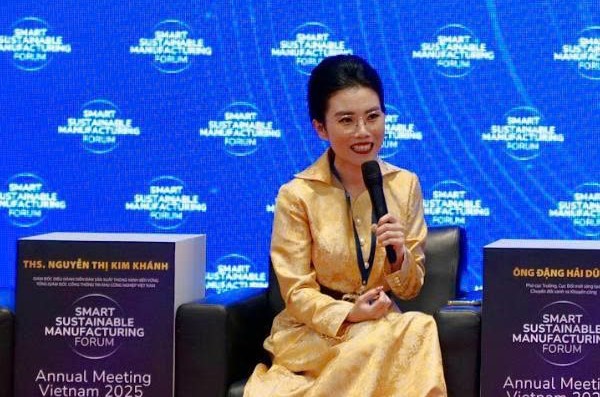
As the organizer of the Sustainable Smart Manufacturing Forum, Ms. Nguyen Thi Kim Khanh, General Director of VIZ, also noted that the reality in industrial parks shows that the lack of connection between the "three stakeholders" is becoming the biggest obstacle hindering the process of increasing the technological content in production.
“"Based on our observations in industrial parks, we've noticed that many businesses want to apply high technology but lack a sufficiently qualified workforce. Meanwhile, universities have strong research potential but don't know exactly what businesses need," Ms. Khanh analyzed.
According to Ms. Khanh, the "three-party" connection model not only solves the human resource problem but also creates an innovation ecosystem. "When the government creates favorable policies, universities provide applied research, and businesses place specific orders, we will have a positive cycle. This will not only help increase the technological content in production but also create a sustainable competitive advantage for Vietnamese industrial parks.".
Ms. Khanh also emphasized the urgency of this: “In the context of increasingly fierce global competition, industrial parks cannot rely solely on cheap labor. We must transform to a knowledge- and high-tech-based model. And the key to achieving this is close and effective collaboration among the three stakeholders.”.
Sharing the same view, Mr. Chau Dinh Thanh stated: "Only with effective connection and collaboration among the 'three stakeholders' can we truly achieve a comprehensive transformation, from a traditional production model to a smart, sustainable production model capable of international competitiveness."“
Because successfully addressing the human resource bottleneck will not only help industrial parks fill vacant land, but will also create a strategic impetus, enhance national competitiveness, and help Vietnam confidently welcome high-tech investment waves and move further into the global value chain.
SKIN


